
Details
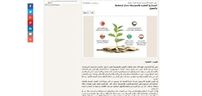
Build. Grow. Achieve.
The governments in Egypt and Gulf countries are consistently working on developing their small and medium-sized businesses to enhance their competitiveness to ensure economic mobility and buttress up business platforms.
The level of achievement and development in this regard varies from one economy to another, considering population growth, distribution of wealth, size of public debt, GDP and trade balance. In the meantime, government support is almost invariable despite the discrepancy in planning, stages of implementation, mechanisms and timeframes.
In this regard, Al Mazaya Holding’s weekly real estate report pointed out that the situation is becoming clearer in Egypt on account of the growing need to encourage and finance small and medium-sized enterprises (SMEs) on a permanent basis due to rising poverty and high unemployment rates – facts that entail immediate planning and funding to ensure operational mobility.
The public and private sectors share the same position towards the development of SMEs, as they both play key roles in boosting productivity. Industry data indicates that government banks have pumped nearly LE26 billion to finance SMEs initiatives since the beginning of 2016 through 2017, which included agricultural, industrial and renewable energy projects at competitive interest rates.
In the same time, the Central Bank of Egypt is leading the trend and allocated LE200 billion to finance these projects, while banks operating in the country are required to allocate at least 20% of their credit portfolios to small, medium and micro enterprises. The World Bank is working in the same direction in the Egyptian market, where it seeks to develop SMEs by modernising their mechanism of work and marketing strategy at the regional and global levels while providing the needed know-how and getting involved in assessing the current situation and setting priorities in collaboration with local authorities concerned.
Al Mazaya pointed out that the need for SMEs is felt more in the Saudi market which seems more ready to make qualitative leaps in this context because of the size of the Saudi economy and the large number of small, medium and large cities being launched in addition to the size of Saudi society, where there is an urgent need to develop projects in all locations in order to evolve the local economy, fight poverty and unemployment, and open up new horizons for young people. This is in addition to the importance of the complementary role played by these enterprises in providing the needs of mega industrial sectors, including raw and support materials
Within this framework, the necessity arises for more cooperation between relevant government agencies and the private sector in order to promote the SMEs sector, being the largest employer of the labour force. Figures in this respect indicate that 99% of private sector SMEs in the Kingdom are contributing 22% to Saudi GDP, providing only 4% of the country’s exports.
The development of SMEs is consistent with the objectives of the Kingdom’s Vision 2030, which focuses on increasing the financing of small and medium enterprises through the banking sector from 2% to 20%. It depends on a set of strategies, including the creation of job opportunities, tapping fresh markets and laying more focus on innovation, technology, education and development of necessary skills.
The report says that SMEs prospects are more auspicious in the UAE than in any other part of the region, as they are supported and monitored directly by government agencies and are also highly prioritised by the private sector – advantages which help achieve more positive results year after year. It should be noted here, however, that there still is a need for more support and development, given the positive economic and social role played by SMEs.
Industry data in the UAE shows that the contribution of SMEs to the country’s GDP reached 60% at the end of 2016. These projects account for 86% of the labour force in the private sector. The wholesale and retail sectors account for 73% while the services sector accounts for 16% with the industrial sector accounting 11%. Competent authorities seek to develop the performance of these sectors and their contribution to the country’s economy and expand their activities to include the tourism, technology, information and food sectors. In the meantime, related banking products require further development to meet the needs of small and medium-sized entrepreneurs during the stages of incorporation and production.
Al Mazaya report sheds light on the growing role of SMEs in the Bahraini economy and the increasing level of cooperation witnessed between the public and private sectors. The SME sector accounts for 80% of the Bahraini economy and contributes more than 30% to the GDP, which shows the need for more focus on development and investment planning in the coming years in order to maintain the achievements and secure new qualitative leaps, by providing adequate funding and more efficient regulation of the country’s business environment, while ensuring the proper development of skills and establishing a culture of innovation. All this should be supported by direct government support from state departments concerned, which are already allocating 20% of the value of government procurements to SMEs.
Al Mazaya stressed the fact that Bahrain’s business climate is a fertile ground for establishing SMEs. These projects are supported by the government in line with global trends. Bahrain’s efforts in this regard placed the country in the 33rd position out of 137 countries, in terms of business incentives, which reflects the volume of efforts being made and the scale of opportunities available despite the challenges the country is going through.
The growing performance of SMEs in the Sultanate of Oman is attributed to the efforts being made to support and motivate entrepreneurs and enhance the efficiency of these projects through concerted action and synergies that ultimately lead to empowering entrepreneurs in the Sultanate.
These efforts are currently focused on narrowing the gap between stakeholders from the public and private sectors to identify areas that need to be developed, and thus ensure further successes.
It is noteworthy that SMEs play a significant role in the economic development of the Sultanate and efficiently contribute to the fight against unemployment and to achieving the aspirations of young people and empowering them under the current volatile economic conditions. It is worth mentioning here as well that these projects play an indispensable role in the economy of Oman, being the largest employer of labour, therefore contributing to increasing state revenues. In this regard, the report noted that the contribution of SMEs to the Omani GDP ranges between 20% and 23%, which also reflects the volume of achievements and the size of plans needed to be implemented.
Clippings