
Details
Build. Grow. Achieve.
-Increased aviation sector investments catalysing inclusive economic growth in Middle East
-GCC airlines projected to book $800 million in profit in 2019
-Airport passenger traffic forecast to grow 4.3% annually
Airline industry indicators across the Middle East have delivered impressive results over the past period, during which other economic sectors are beset with a myriad of pressures and challenges. According to available data, the air transportation sub-sector has stimulated other service, commercial and industrial sectors, with robust performance indicators confirming a 7% increase in the passenger traffic in the Middle East over the past year.
In this regard, Al Mazaya Holding in its weekly report said that this growth has contributed to the expansion of other economic sectors, especially real estate and construction, and raised the total value of investments and mutual trade around the world, therefore, helping to promote tourism and real estate products, as well as accelerate cultural exchanges in an unprecedented way.
Al Mazaya report noted that the profits of the Middle Eastern airlines have hit higher levels and are expected to reach $800 million by the end of this year, compared to $600 million witnessed last year. This comes against the backdrop of expectations that the global aviation industry will achieve a net profit of $35.5 billion by the end of this year, with investment returns to grow by 8.6%. The total revenues of airlines reportedly reached $885 billion, which means a growth rate of 7.7%.
Al Mazaya added that this growth was in line with the arrival of 4.59 billion passengers, which indicates that there are many opportunities and stimulating factors for all shared sectors in the Gulf region.
Al Mazaya noted that the development of the aviation sector is ongoing at an exceptional pace in the Gulf region, where up to $49 billion is set to be spent on strengthening the sector and providing it with new technological potential, AED180 billion of which is allocated to the development of 95 airport infrastructure projects.
Expanding airport capacity and supporting infrastructure as well as developing new ones are all substantial steps on the path towards meeting the projected increase in air traffic passenger demand, which is expected to grow by 5.9% annually until 2036.
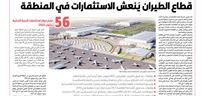
It is worth mentioning that the Arabian Gulf countries are accelerating transport upgrade projects on airport, ports and railways between major cities, with reports indicating that tourism infrastructure investments will reach $56 billion by 2022.
The aviation industry-led opportunities to revive industrial and commercial mobility and modern technology investment are likely to increase the passenger and cargo traffic worldwide to nearly 48,000 aircraft by 2038. Air traffic is, therefore, expected to grow by 4.3% annually during the period, which requires 550,000 pilots.
Al Mazaya reports on the tremendous growth prospects for the travel industry in the Middle East, where the direct contribution of the sector to GDP is expected to increase by US$133.6 billion, or 4.2% annually by 2028.
There are countries that are preparing to increase their share in the global travel sector, such as Saudi Arabia, which plans to receive 23.3 million tourists with a growth rate of 5.6% annually until 2023, with the tourism and travel sector expected to contribute more than $70 billion to GDP by the end of this year.
Al Mazaya expects competitiveness to dramatically grow over the coming period in the global travel market, whose value is estimated at over $2 trillion, with outbound travel spending in the Middle East expected to reach $165 billion by 2025.
Al Mazaya report concluded by highlighting the pressures faced by the global aviation sector that, it said, may lead to a decline in profits due to higher fuel prices, escalating trade wars and the wide fluctuations of the dollar exchange rate, which are all fundamental factors that ultimately have their own bearing on air transport demand.
Clippings