
Details
Build. Grow. Achieve.
Banking sector drives real estate mobility
-Al Mazaya Report: More investment
focus needed on SMEs to spur economic growth
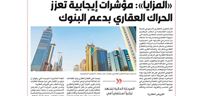
Banks play a highly significant role in supporting and financing real estate activities despite the besetting challenges and risks associated with medium and long-term investments. The positive relationship between the banking and real estate sectors is progressively growing despite the current challenging circumstances where growing financing mobility is highly anticipated. The banking sector is regarded as the first line of defence for the real estate sector in addressing the surrounding challenges and in providing financing tools that match the prevailing conditions.
The weekly real estate report issued by Al Mazaya Holding said that recent industry data indicated significant growth in the level of mortgage loans in Saudi Arabia during the first half of this year, which formed a strong base to be relied upon in the plans to launch real estate projects over the coming period. These data show a continuing growth in the volume of home mortgages provided to individuals since the beginning of 2019 to the end of May to more than 58,800 contracts with a total value of SAR 27 billion compared to about 18,000 contracts at a total value of SAR 11.68 billion, a growth rate of over 131% as compared to the corresponding period of 2018.
Within the same context, this pace of activity has reflected on the number of mortgaged properties, which reached 40,000 properties during the last ten months compared to 9,500 mortgage contracts during the same period last year with a growth rate of 300%. Residential properties had the largest share of mortgaged properties, i.e., 70%. The increase in mortgage activities resulted in great demand on the Saudi real estate market that will be reflected positively on other shared sectors.
Al Mazaya report pointed out that the UAE real estate sector is considered one of the most transparent and responsive to the surrounding variables if compared to the region’s other sectors. The significant growth in financing activities in the UAE is attributed to the fair rental returns generated in addition to the fact that the investment opportunities provided by the sector are real opportunities that excel in form and content those provided by other sectors.
Real estate credit facilities in the UAE hit AED 379 billion in 2018, showing an 8.5% YoY growth. Residential and commercial loans remained stable despite falling home prices, reflecting the market’s ability to adapt to the current slowdown. Financing activities are expected to grow further following the new residency visa incentives, which are expected to boost demand for buying real estate through mortgages. According to available industry data, the banking sector’s confidence in the real estate sector in the UAE has increased and resulted in a record AED 100 billion worth of real estate transactions in the first half of this year in Dubai, AED 65 billion of which are mortgages, with AED 31 billion recorded in transactions in the Emirate of Abu Dhabi and AED 2.97 billion in the Emirate of Sharjah.
According to Al Mazaya, more investment focus should be directed towards providing financing for SMEs, which are the real catalyst for commercial, financial and real estate activities in the region at the current stage. The creation of viable tools and financing products that fulfil the requirements of mortgage companies is, therefore, necessary for increasing these companies’ contributions to economic activities.
The Mazaya report highlighted the investment momentum and government focus on the real estate sector, in the face of the ongoing decline in property prices, which ranged between 10 to 20 per cent and even more in some markets of the region over the recent years. However, since the beginning of this year, the region’s real estate markets have regained their attractiveness, backed by growing sales and purchase transactions.
Clippings