
Details
Build. Grow. Achieve.
Freehold Projects Draw Foreign Capital and Accelerate Urban Development in GCC Markets
Enactment of resilient foreign ownership laws is a must to augment investment returns
The ability to introduce unique innovations and ideas into real estate projects to meet the growing needs of end-users plays a major role in enhancing demand for freehold projects, according to recent market data and statistics.
In its weekly real estate report, Al Mazaya Holding pointed out that there are different factors and criteria that have their own bearing on the level of demand for freehold property. Responsiveness to these criteria and factors – including market developments and foreign supply and demand indicators – is one of the key factors to ensure the success of real estate companies and, consequently, customer satisfaction.
The report noted that the freehold sector has witnessed impressive growth in the region over the past years, incentivising countries to develop and expand their freehold laws and regulations, which, in turn, helped promote foreign investments and diversify income sources. In this context, the report highlighted that the increase in freehold shares in new real estate projects has implications that beef up a company’s status in the market, maintain a competitive edge for its projects and ensure its sustained activity. This will ultimately be in the interest of wider economic and financial activities in the countries where investments are taking place.
The report cited Turkey as an example of the countries that have, over the past few years, sought to bolster its real estate market by enacting foreign ownership laws that have proved to be an effective catalyst for accelerating real estate investments by drawing more foreign capital into its markets.
Turkey’s laws and legislations that allow foreigners to purchase property have attracted capital, tourist and investment flows to the country, reviving the real estate market in a remarkable way. Thanks to these laws, and other factors, including a distinguished strategic geographic location between Asia and Europe and a resilient economy ranked 17th among the world’s major powers and 6th on the list of Europe’s top economies, Turkey has proved to be a very competitive market. Recent real estate statistics showed that an excess of 13,000 properties have been owned by foreigners at the end of 2013; 19,000 by end of 2014; 20,500 by 2015.
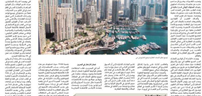
Dubai is another remarkable example where the development of foreign ownership laws has played a major role in earning the Dubai market a prestigious and competitive position in the international market. This is mainly due to the resilience of these laws and their ability to cater to all needs and meet all demands, which has consequently reflected positively on the economic performance of the emirate.
In the UAE market, the report noted that enactment of laws encouraging foreign ownership of property has boosted economic growth rates and significantly contributed to diversifying real estate products and solidifying demand rates in times of recession, ultimately drawing more direct foreign investments into the construction industry. Thus, this has resulted experienced exceptionally impressive growth rates.
The report highlighted that recent data and statistics estimate the total value of foreign investments in the Dubai realty market to exceed AED 60 billion. The businesses established by foreign investors in Dubai are valued at more than AED 57 billion during the first half of 2016, with the volume of property purchased by foreigners estimated at AED 28 billion – indications that prove in no uncertain terms that the impact foreign ownership laws have on the investment landscape in the country is positive.
In the meantime, the report stated that the freehold laws in Qatar require the expansion of investment rules and procedures so as to facilitate freehold ownership of property by Arab and foreign investors. That is because the freehold law, currently in force, only allows full ownership to GCC citizens, but not others. The law does, however, provide special incentives and privileges for long-term leasing for a period of up to 99-years with a renewable option for a similar period.
Non-Qataris are allowed to invest in and own land, buildings, and development in three specific projects only: the Pearl, Western Gulf Lake and Al Khor Resort Project. The report noted that 90% of direct foreign investments in Qatar are focused on the Oil and Gas industry and its subsectors, which account for 52% of the total value of direct foreign investment in the country. They are followed by mining investments that account for 38% of the total value of direct foreign investment and then the financial investments at 4%.
With regards to Bahrain, the report mentioned that the kingdom has enacted resilient freehold legislations that reflect positively on its economic growth. This has largely been a result of the Bahraini government’s clear vision and ambitious plans to strengthen economic development efforts and create job opportunities for Bahraini citizens, providing foreigners with 100 % ownership options in investment havens like Amwaj Island, Abraj Al Lulu, and Bahrain Pearl.
In conclusion, the report underlined the significant role played by freehold real estate in attracting foreign investments to the local and international realty markets, noting that world countries are sparing no effort to augment the value of foreign investments, owing to their high returns and due to the fact that they are realizable assets that are readily convertible to cash without sustaining any losses whatsoever. The report also called for developing resilient laws to streamline the foreign ownership of property in most of the countries in the region in order to boost economic diversification plans, output and competitiveness.
Clippings