Your Future Begins Here – Explore Homes That Inspire.

Details
Build. Grow. Achieve.
"The real estate market is undoubtedly one of the most dynamic markets in the global scenario, and Al Mazaya Holding Company ensures that you remain updated about the latest developments and trends in the property market. We invite you to browse through our exhaustive media library to know more about global and regional markets so that you are in a position to make informed decisions when it comes to your property investments."
September Week 1
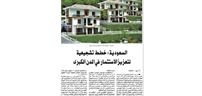
Myriad investment opportunities in the offing to boost homeownership levels
Saudi real estate sector developing comprehensive incentive plans
to draw investments to major cities
Property sector’s contribution to GDP increases to SAR128 billion by end of 2016, a growth of 6% since 2012
The real estate sector in the Kingdom of Saudi Arabia has secured considerable leaps over the past ten years in terms of projects, their scale and investment values. But the sector also faced many obstacles that stood before its development and growth until it reached its current levels of resistance, cohesion, strength, and competitiveness at the regional level. In the meantime, laws, and legislation in force have played a major role in curbing the development of the sector and its ability to attract investment flows, while the neighbouring markets have taken earlier initiatives and more efficient steps to develop their investment laws, streamlining cash inflows and foreign ownership.
In its weekly report, Al Mazaya Holding said that Saudi Arabia has focused over the past two years on the development of laws and regulations that enable the real estate sector to attract foreign investments – a positive transformation that is expected to strengthen the productive capacities of the country’s major economic sectors, and to lead to a strong, agile and competitive economic sector resilient enough to resist financial and economic crises.
Al Mazaya has indicated that the property market in Saudi Arabia is one of the most powerful in the Middle East.
Commercial and residential properties are the strongest catalysts for the Saudi real estate sector, which is primarily a rental- rather than an ownership-oriented market. Owned units across the entire Kingdom don’t exceed 46% of the existing properties, 56% of which are in the capital Riyadh. This indicates that there are many investment opportunities to raise this percentage and bring it up on par with that in the neighbouring markets if forces of supply and demand have been efficiently balanced and obstacles to raising ownership rates have been removed.
Al Mazaya report noted that the Kingdom’s mortgage laws have played a significant role in encouraging Saudi citizens to own homes, improving financing opportunities, and supporting the banking sector by providing financeable and mortgageable products. These laws, said the report, have also contributed to mitigating risks, regulating government support programmes and controlling prices.
Al Mazaya added that the Saudi real estate sector’s contribution to the country’s GDP increased to SAR 128 billion by the end of 2016, achieving a compound growth rate of 6% between 2012 and the end of 2016.
The new laws and legislation developed by the government over the recent period are aimed at reducing housing costs for Saudi citizens by bringing down land costs in addition to improving competitiveness levels, and contributing to maintaining positive growth rates over the coming years by developing integrated plans in line with the economic transformation strategy.
The weekly report also referred to the positive effects brought in by the law of imposing fees on unexploited land, estimated at 4 billion hectares, across the Kingdom. This law is part of the development of laws and legislations conducive to regulating the real estate market and reducing the unjustifiable increase in land prices. Authorities concerned, through this legislation, have sought to curb speculations on white lands – large plots of idle urban land — and to find solutions to the housing crisis and accelerate the pace of construction on the outskirts of cities and suburbs.
The report added that the comprehensive implementation of legislation related to the real estate sector will direct citizens towards owning homes at affordable prices, especially in view of the continuing housing crisis across the Kingdom. The coming years are expected to witness more positive effects on boosting the attractiveness of real estate investment in KSA, specially in major cities where vacant, undeveloped lands account for 20% of the total space.
Al Mazaya said that enactment of laws and amendment in legislation related to the real estate market and the financial and economic sector, in general, have been rapidly progressing over the past period, citing in this regard the tendency to allow foreign investors to acquire full ownership of companies in the health and education sectors. Such measures which are likely to attract investments and propel activities at the real estate sector are expected to generate investment opportunities worth more than $180 billion over the next five years.
Al Mazaya mentioned that despite the recession that the real estate market has faced for three years, and the accompanying declines and correction of trading prices and the resulting postponement of purchase and investment decisions on land and real estate products, the sector is still waiting for a further correction.
The benchmark index of prices has fallen by 14.4% in the past few years, declining 8.6% during the second quarter of this year compared to the same period last year, said the report, attributing this to continual pressures on the commercial and residential land sector.
On the other hand, the industry data reflect the positive effects of the package of laws and legislation being implemented and those still in the pipeline. The Saudi Ministry of Justice data shows that the total number of real estate transactions already conducted reached 714,000 since the beginning of this year. The banking sector has provided more than SAR110 billion in property financing, which reflects the size of investment opportunities that can be financed following the development of a robust legislative system and efficient incentive plans.
Concluding, the report stressed the importance of continuing to evaluate and analyse all challenges and risks faced by the real estate sector in Saudi Arabia during the current period, as the Kingdom is currently undergoing a process of restructuring, including a privatisation process targeting all economic sectors, in the forefront of which comes the real estate platform. The sector, according to the report, can be the largest beneficiary of the current financial and economic mobility if relevant laws and legislation go into force as planned, which will stimulate the performance of the economic sector in its entirety.
In This Section
Clippings