
Details
Build. Grow. Achieve.
High liquidity reflecting positively on neighbouring markets
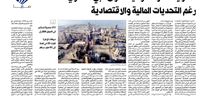
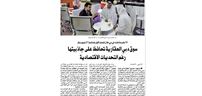
Dubai real estate market making great strides, maintaining attractiveness despite global economic challenges
Dubai projects exceed AED21 billion during H1 2017
During the first six months of 2017, the property market in Dubai witnessed a qualitative investment leap. It continues to grow in spite of all regional and global financial and economic challenges and pressures piled up by other real estate markets around the world. Challenges that are attributed to the fact that realty markets, in general, have a lot in common, including similar designs, spaces, and end-products, but differ in terms of costs and legislation.
In its weekly real estate report, Al Mazaya Holding said that the Dubai real estate market relies on luxury and sophisticated products and adopts modern design techniques to create new investment prospects that enable investors to benefit from the emirate’s resilient economy and high employment levels, ultimately boosting demand for all products, goods, and services.
The report pointed out that liquidity is often negatively affected by accumulating pressures, including myriad real estate auctions which absorb large chunks of liquidity from the real estate and capital markets. Political stability significantly impacts cash levels as those wishing to buy and invest in the real estate market prefer to postpone their decisions until they get a clear vision of ground realities.
Al Mazaya report explained that the more prices decline, the lower liquidity will be on the market, specially that amendments introduced by banks to raise interest rates on cash deposits would negatively accelerate cash withdrawals from the property markets, as stable returns are far better than volatile gains under unstable conditions.
The report noted that more than 68 real estate projects were launched worth over AED21 billion during the first half of this year, with the market attracting an increasing number of international investors, which ultimately boosts demand and confidence in the domestic economy.
Around 535 projects of different sizes and purposes were handed over to their new owners during the past ten years in addition to completing 24 projects during the first six months of the year.
The achievements made by the real estate market in Dubai are important indicators that must be considered in assessing its ability to move forward on the path of growth. The emirate’s realty market has become mature enough to take advantage of the emirate’s infrastructure boom and the country’s political and economic stability.
The report referred to the data released by the Dubai Land Department, which showed an exceptional diversity in the number of nationalities investing in the real estate market of the Emirate. According to the figures, around 217 nationalities invested in the emirate’s property market during the first half of 2017, with sales carried out during the same period hitting a new high of AED63 billion, showing an increase of 29 per cent compared to the first half of 2016. Real estate transactions set a new record of AED132 billion in the first half of 2017, an increase of 17 per cent over the same period of 2016. The data reflect the success achieved against the pre-set targets, as well as the emirate’s ability to attract local, regional and global capital.
Al Mazaya pointed to the investment returns that investors in the real estate sector can get by targeting promising investment opportunities generated by growing investment activities and increasing liquidity levels in the market. The data indicate that it is possible to get profit rates ranging between 5% and 30% while market indicators estimate returns at 20% – 30% if the hotel sector is targeted, given the high occupancy rates throughout the year and accelerated construction investments as well.
On the other hand, returns on residential real estate investments are still attractive. Current data indicate that 10% – 20% returns can be achieved, while an average yield of 5% – 8% can be achieved according to market indicators. Office spaces retain an interest rate ranging between 8% and 10%.
The report mentioned that all indicators addressing the real estate market in Dubai corroborate the positive ongoing activity across the sector during the second half of this year. In addition, the retail sector has a wider impact on the level of commercial and financial mobility and the value of liquidity generated and traded, together with growth and improvement across the tourism sector in the run-up to the World Expo 2020 Dubai.
It noted that real estate sales are still setting new records. The housing sector has approximately 8,000 residential units under construction that are expected to be delivered by 2020. This reflects the high level of ongoing activity, the volume of projects and the expected supply and prices. Corrections recorded in the apartment and flat sale prices ranged between 5% and 10%, and have played a major role in stimulating demand at the local, regional and global levels.
Al Mazaya concluded that the exceptional activity recorded by the Dubai real estate market during the first half of the year, which is expected to continue until the end of the year, will positively impact the financial and economic prospects in the emirate and rest of the country in addition to the entire region due to the significant volume of the market in terms of projects and their prices as well as demand levels.
Clippings