
Details
Build. Grow. Achieve.
Amidst bullish economic indicators
GCC states enjoy advanced industrial zones capable of attracting foreign and local investments
The demand for industrial spaces is a significant indicator of economic growth as it reflects the country’s ability to get high rankings at local and international economic indices. Forces of demand are typically associated with developmental and economic transformational plans, which are already underway in the region, and translate the importance attached by the governments of the region to the industrial sector and steps are taken to drive its contributions to Gross Domestic Product (GDP).
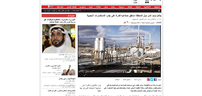
According to Al Mazaya Holding Weekly Real Estate Report, most of the GCC states have advanced industrial zones capable of both attracting foreign and local investments and in the same time surviving economic pressures created by the challenges besetting the region.
The report mentioned that the declining demand for residential units, amidst continued supply of ready-to-move properties, has negatively affected selling and rental rates, with residential units demanded by foreign companies being the only exception. This, according to the report, has had its knock-on effect on the demand for commercial and industrial spaces as well as on the value of new investments.
The report revealed 10-20 per cent drop in demand for industrial and commercial spaces in Qatar, with more declines projected during the first half of the year as a result of the demand for residential units, which likewise started to decrease owing to the downsizing policies adopted by some companies and growing supply of other residential options that meet the needs of different segments of society.
The declining global oil prices that resulted in decreasing government spending have had their own bearing on employment rates and commercial and industrial activities, said the report, pointing out that Qatar has started to launch logistics and industrial projects to revitalize business, support local products and diversify investment techniques as well as providing momentum to increase the role of the private sector in the developmental drive, thereby creating new opportunities for young investors, including small-medium scale investment companies.
In the Emirate of Dubai, the demand for industrial areas has been stable during Q1 of 2017 despite the economic volatility witnessed at regional and global levels, said the report, noting that real estate demand in the industrial sector, including transformational industries, increased 18 per cent in Dubai’s industrial free zones during 2016, with warehouses having been in strong demand during the same period.
The report attributed stable demand rates in the UAE to the billions of dirhams being spent by the government on developing the industrial sector, including the launch of sophisticated industrial zones supported with premium infrastructure services and hundreds of parks and plants. In this regard, the report cited establishment of KIZAD, Dubai Industrial Zone and Dubai South as prime examples of efforts being made to promote local industries and bring them at par with global standards.
In Saudi Arabia, efforts are going on in full swing at the government level, with data indicating a growing upward movement in developing industrial areas as a result of the recorded increase in the number of industrial, service and logistics contracts being awarded. The report also cited the economic transformational plan adopted by the country to further empower the industrial sector.
The report highlighted the trend towards launching industrial infrastructural enterprises in Saudi Arabia, including different types of industrial cities owned by the private sector as well as those executed by the Saudi Industrial Development Fund, with investments channeled to the sector over the past few years amounting to SAR 1.1 trillion. The report added that Saudi Arabia, in doing so, relies on an integrated infrastructure to generate employment opportunities, improve investment potential and create a business-friendly environment capable of enticing local and foreign investors.
In Oman, the outlook is more optimistic on account of the direct and indirect support provided by the government, with total leasable industrial areas across all industrial zones in the Sultanate reaching more than 33 million square meters during the first half of last year. Plans are underway to ensure availability of integrated industrial areas over the coming period by diversifying sources of income and creating new solutions to consolidate the economy.
According to the report, Oman’s Public Establishment for Industrial Estates has created more than 33,000 job opportunities through the projects launched at the country’s industrial parks, with the total space of leasable areas exceeding the 90 million SQM mark, all of which are dedicated to industrial, commercial and service purposes. Attracting investments worth more than OMR 6 billion in 2016, industrial zones in the Sultanate are integrating state-of-the-art technologies into different industries in order to save time and effort, accelerate production and enhance quality and efficiency.
Concluding, the report said the region’s industrial sector is moving in the right direction, enjoying true potential for success thanks to the continued support provided by the governments and their empowerment of the private sector, calling for developing efficient mechanisms that enable the GCC states to promote and market their industrial zones on the global level in order to ensure the highest possible levels of occupancy and demand and generate best investment returns.
Clippings