
Details
Build. Grow. Achieve.
To diversify economy and reduce government expenses
-Multi-billion dollars projects by Saudi Arabia in line with Vision 2030
–Real estate sector primary beneficiary from mega developments
Non-oil sectors expected to grow 3.7% this year
Al Mazaya Holding, in its weekly real estate report, said the financial and economic developments witnessed by the economies of the Gulf region and rest of the world over the past ten years have generated significant signs about the nature of feasible and efficient projects that can achieve the aspired development goals.
The investment decisions taken and implemented during the last 10-year period and those being carried out at present, created real implications about what the region’s countries should do to establish an economic system capable of dealing with the besetting challenges in a way that differs from what was done over the past period.
UAE economic vision is quite clear while the Saudi economy seems more audacious in terms of a large number of investment projects being implemented in a way that should reflect favourably on neighbouring economies.
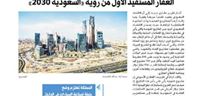
The Saudi economy is witnessing rapid progress, thanks to an investment-friendly environment, where more diversified projects, mainly residential, hospitality, retail and tourism developments, are being launched in line with the Saudi Vision 2030. In this regard, the report cited market data indicating that more than 250 industrial projects are under construction in Saudi Arabia with an estimated total value of $850 billion targeting the petrochemical and other sectors, especially the real estate platforms.
In this regard, the report highlighted Neom, a $500 million planned transnational city and economic zone spread over an area of 26,500 sq km to be constructed in Tabuk, Saudi Arabia, close to the border region of Saudi Arabia and Egypt (via a proposed bridge across the Gulf of Aqaba). The city was announced by Saudi Crown Prince Mohammad bin Salman at the Future Investment Initiative Conference in Riyadh, Saudi Arabia, on October 24, 2017. He said it will operate independently from the “existing governmental framework” with its own tax and labour laws and an autonomous judicial system.
The report added that the KSA, while carrying out such mega projects, seeks to diversify its national income resources and reduce government expenses, with plans being underway to establish local arms manufacturing plants to save more than $80 billion now being spent on weaponry purchases.
The Saudi government is also looking for options to develop a plan for evolving the automotive industry to save more than $14 billion, in addition to developing local tourism entertainment to save the Saudis’ annual spending abroad, which is estimated at $22 billion.
Saudi Aramco’s initial public offering will provide additional revenues for state coffers and boost new investments in the Kingdom. The key idea behind the move is to diversify the economy and help wean it off oil.
Al Mazaya added that inflation in the real estate market is the biggest threat and one of the key obstacles to economic growth and local development, as it results in unjustified increases in production and operating costs, which leads to concomitant rises in living costs in the Saudi society.
Landowners and real estate tycoons are the only gainers from inflation, said the report, noting that the Saudi real estate market rates are now getting fairer, and normal to average income. In this regard, the report cited a number of factors that have reflected positively on the market, including falling oil prices, cost optimisation, boosting consumer efficiency, fighting the malpractices of fraudulent landowners, the adoption of vacant land charge system, and controlling speculations to ensure fair price levels. The report added that the decline in oil revenues resulted in the rationalisation of trade and investment spending, and reined in random cash flows, while the high cost of financing played a role in reducing the growth of liquidity locally, and therefore led to more price control, preventing potential price bubbles.
Al Mazaya pointed out that the supply of land, and new residential, industrial and commercial real estate units, including the launch of more ready-made projects, will continue to rise, leading to a weak real estate market in the whole region in general and in Saudi Arabia in particular, at least until the end of the year.
Al Mazaya added that real estate markets in the region have been affected by the decline in liquidity values and transactions executed in a number of markets that have had a direct impact on reducing speculative and harmful random trends. Market data indicate that the Saudi real estate market witnessed a decline in real estate transactions by more than 30% during the first quarter of this year.
The report addressed the role played by real estate brokers, especially as the countries of the region have suffered a lot from their negative performance in terms of supply and demand and consequently rising prices, a situation which in turn led to the development of effective legislation and laws controlling real estate markets and putting them back on track.
Al Mazaya concluded by underlining the importance of focusing on non-oil investments, saying that the region’s non-oil growth is expected to rise to an average of 3.7% this year. The impact of oil prices now rising to$70 a barrel will yield positive symptoms, including improved investor confidence, especially after the real estate markets in the region proved capable of responding positively to all the developments recorded by primary economic sectors. The report added that the region’s GDP is expected to improve as a result of the rise in global oil prices, which will enhance financial performance, reduce deficits, and generate cash flows.
Clippings